Farnaz Hesam Shariati and Sarah King Given recently returned from the American Public Health Association (APHA) 2026 Annual Meeting in San Antonio, Texas. Farnaz and Sarah presented their research and attended sessions on how health depends on the places where people live, move, and age.
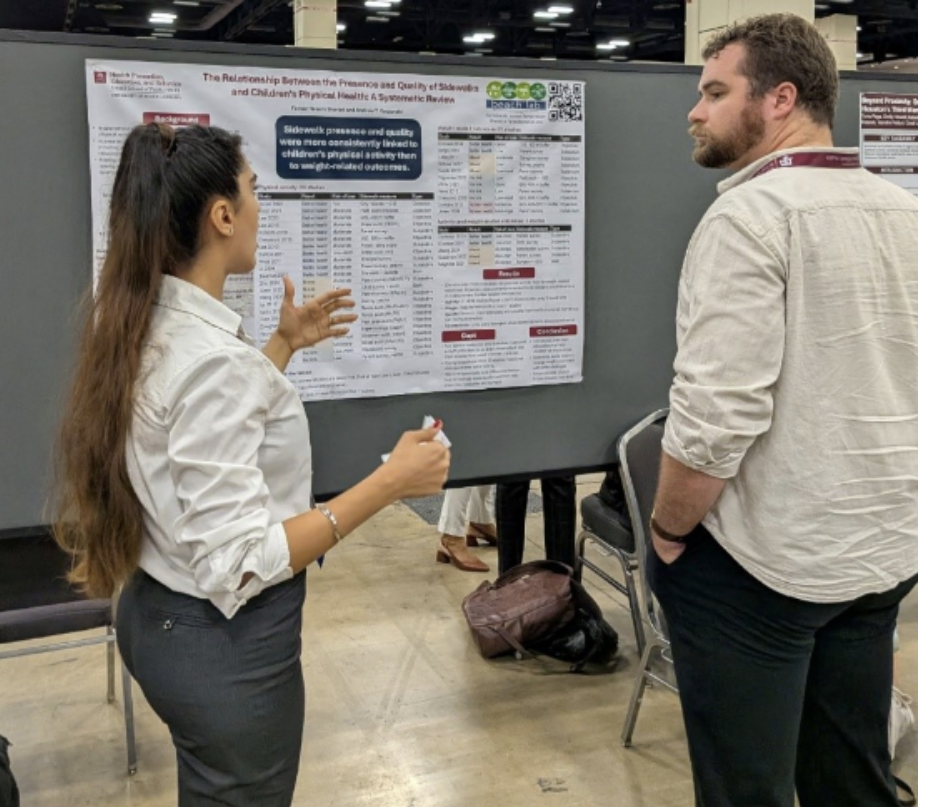
Farnaz’s research interests involve the built environment and health, physical activity and active transportation, health equity, arts and health, and healthy aging, including cognitive health. Those interests guided her session choices. She presented “The Relationship Between the Presence and Quality of Sidewalks and Children’s Physical Health: A Systematic Review,” with Dr. Andrew Kaczynski. Across 39 included studies, sidewalk presence and quality were more consistently linked to children’s physical activity than to weight-related outcomes. The review, published in Childhood Obesity, was the first phase of the Columbia Sidewalks Project.
Sessions she attended, by theme:
- Zoning, walkability, and active transportation
Dr. Jamie Chriqui (University of Illinois Chicago) examined how zoning relates to walkability across the U.S., including traditional versus form-based codes. Dr. Christiaan Abildso (West Virginia University) described a microcredential series to train people to lead rural walk audits.
- Accessibility and disability
Deborah Scharven (City of San Antonio) and colleagues traced the San Antonio River Walk’s accessibility from its history into its future, including a strategic plan that also covers parking, wayfinding, and safety. Dr. Katherine Froehlich-Grobe and colleagues asked whether the motivations and strategies of people who acquire a mobility impairment change over time. Strategies included planning ahead, relying on lessons learned, and self-advocacy.
- Community-centered health
Dr. Kristene Tadese (Brigham and Women’s Hospital) piloted a clinician-led walking group in Dorchester, with health topics chosen from community priorities. Dr. Teal Benevides (Augusta University) shared IIDDEAL, a project to improve health care delivery and access for people with intellectual and developmental disabilities.
- Alzheimer’s disease and cognitive aging
Talks ranged from antimicrobials and Alzheimer’s risk (University of Texas Medical Branch) to polygenic risk scores (University of North Texas Health Science Center at Fort Worth). In BRFSS data, physical inactivity and depression were linked to higher odds of subjective cognitive decline, and the policy implications included age-friendly urban design and green space access. Florida International University researchers linked both short and long sleep to higher odds of self-reported cognitive difficulties in adults 65 and older.
Her takeaways:
– Place matters at every scale, from zoning codes to sidewalk quality to who has a say in the design.
– People with lived experience should shape the work, not only appear in it.
– Cognitive health ties to activity, sleep, mood, and age-friendly environments, where her built environment and healthy aging interests meet.
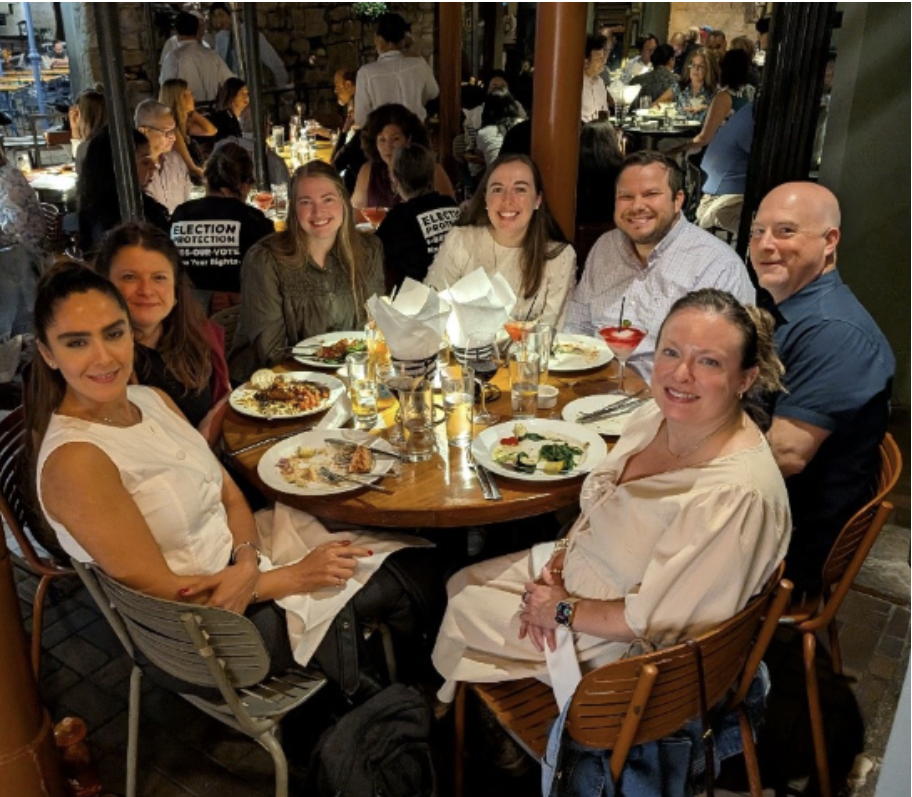
She also enjoyed walking along the beautiful San Antonio River Walk and a great dinner with her advisor and friends. Her presentation was supported by the Butterfoss Community-Based Research Endowed Fellowship, and she thanks Dr. Kaczynski, the presenters, and the organizers.

Sarah also attended the APHA 2026 Annual Meeting in San Antonio, where she shared two presentations exploring how research and community perspectives can inform more equitable public health practice.
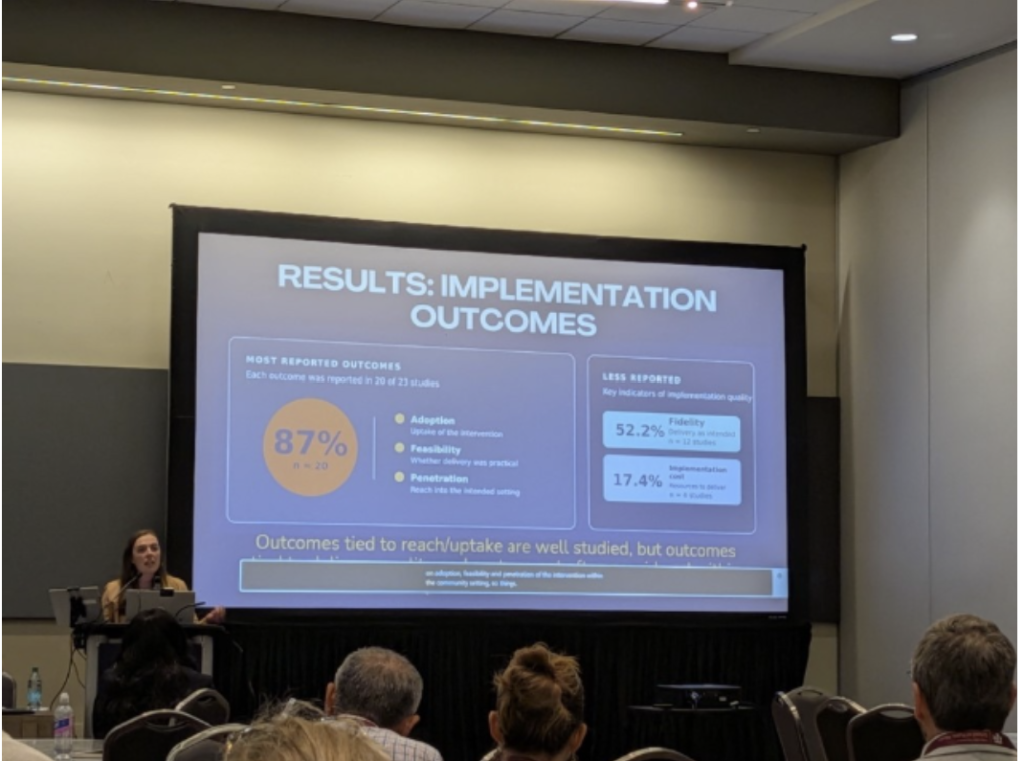
Her oral presentation, “From Evidence to Practice: Implementation Science in Community-Based Physical Activity Interventions,” shared findings from a systematic review of 23 articles. The review examined how researchers support the adoption and implementation of physical activity programs in community settings. Findings highlighted the frequent use of program adaptations, community partnerships, and implementer training alongside gaps in reporting costs and long-term sustainability. These gaps matter for community organizations deciding how to put research into practice with limited resources.
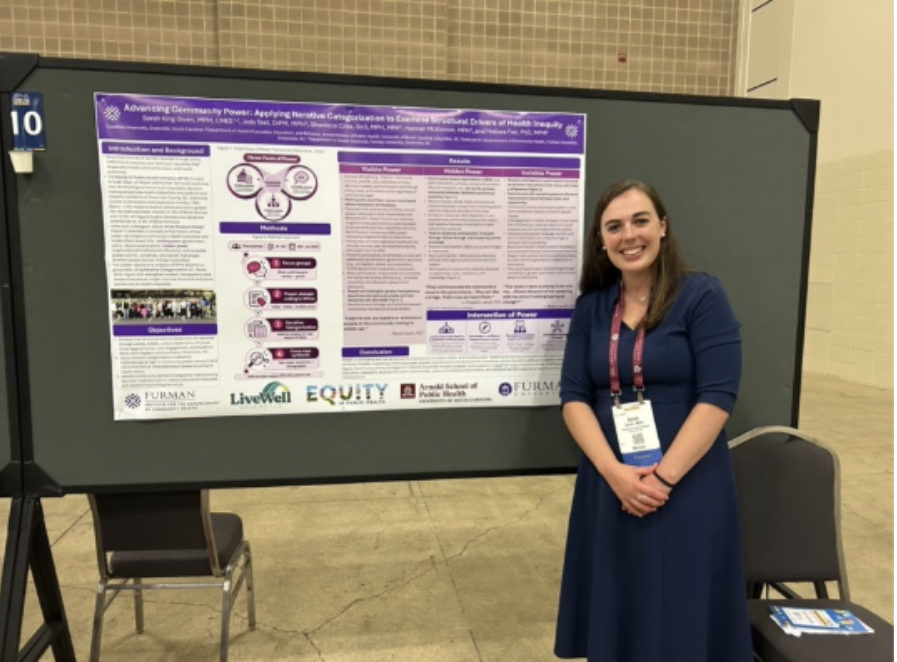
Her poster, “Advancing Community Power: Applying Iterative Categorization to Examine Structural Drivers of Health Inequity,” was a result of her professional work in the Upstate and explored how Black and Hispanic residents in Greenville County, South Carolina, described power and decision-making in their communities. Using a structured, iterative approach to qualitative analysis, the study examined how formal authority, organizational relationships, and shared beliefs shape access to resources and opportunities to participate. Findings emphasized trusted community organizations and residents’ desire for greater transparency and a stronger voice in local decisions.
Beyond presenting, Sarah attended sessions focused on health equity, access to physical activity resources within community settings, and community-engaged research. These themes connected closely with both presentations, reinforcing the importance of involving residents in decisions about the programs and resources intended to serve them. She returned with ideas for strengthening the connection between research and community priorities in her ongoing work.
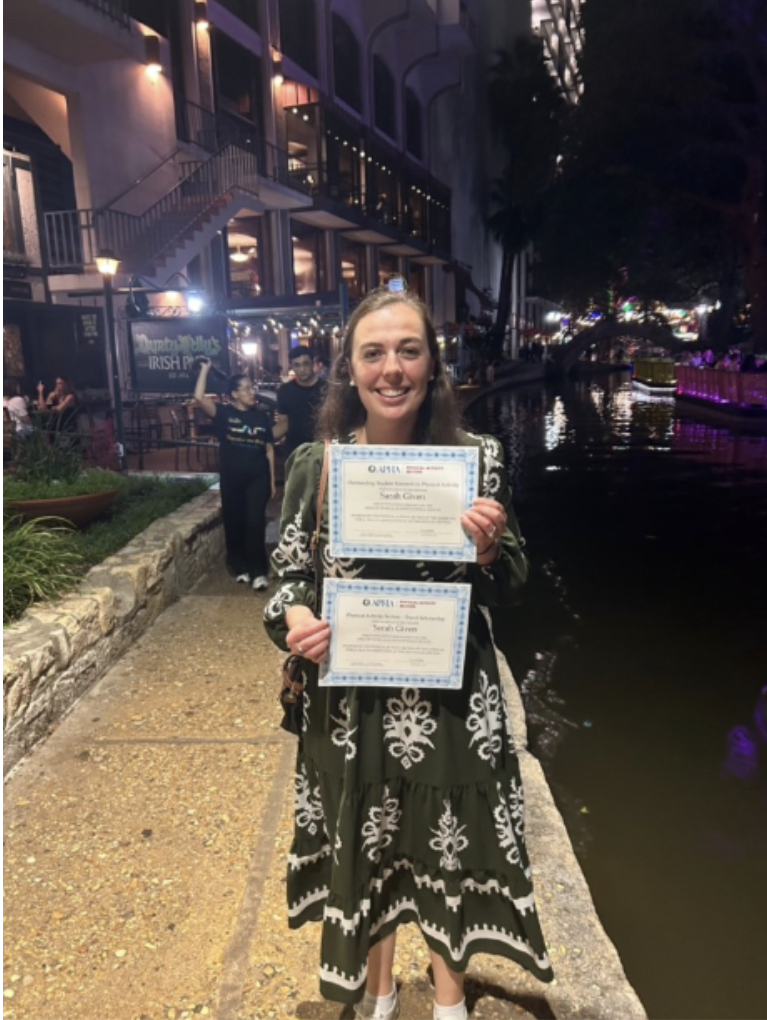
A highlight of the meeting for Sarah was receiving two honors from APHA’s Physical Activity Section. She was one out of six students recognized for the Outstanding Student Research in Physical Activity Award and received a Travel Scholarship from the section to present. These awards highlighted her research and engagement in physical activity and public health while supporting her participation in the annual meeting. She is grateful to the section for this recognition and the opportunity to share her work and learn from others advancing physical activity research and practice. She is also grateful for Dr. Kaczynski’s support in overseeing the systematic review that provided her these opportunities at APHA.